Virtos at icnc26 Berlin
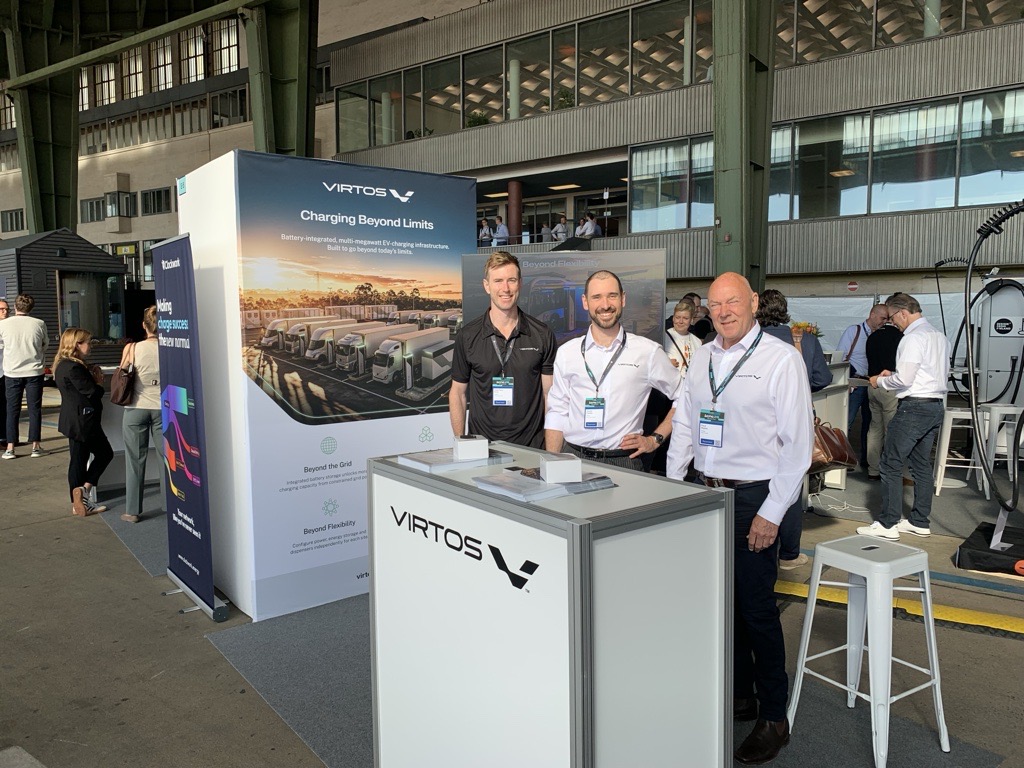
Expanding Virtos into Europe is an important part of our growth strategy, and attending icnc26 in Berlin was an important step in testing our thinking directly with the market.
We spent three very valuable days meeting people from right across the European charging ecosystem: mechanical and electrical engineers, manufacturers, software and infrastructure providers, finance specialists, fleet operators and EV charging experts.
The quality of those conversations was excellent and, importantly, they confirmed four things for us.
Reliability matters enormously.
For critical heavy fleets, charging infrastructure simply has to work. There was strong support for the Virtos approach to reliability through redundancy, using distributed controls and modular hardware to reduce single points of failure.
Flexibility matters.
Every site is different. Being able to configure charging power, energy storage and dispensers independently allows the solution to be designed around what that particular operation actually needs.
Scale matters, and so does future-proofing.
Operators don't necessarily want to build today for where they might be in five years. Our modular architecture allows infrastructure to grow from an initial deployment into a multi-megawatt charging site as fleet requirements increase.
Just as importantly, nothing installed at the start becomes redundant later. Each stage adds to what is already there rather than replacing it, so operators can future-proof a site without over-investing in it. The infrastructure is sized for today's fleet and built for the one that follows it.
But the biggest insight from Berlin was the grid.
We repeatedly heard the same challenge. Operators want to deploy high-powered charging, but they either can't get sufficient grid capacity, can't get it quickly enough, or face significant cost and infrastructure hurdles in doing so.
We didn't need to convince people this was a problem. They are already dealing with it.
James Kennedy addressed exactly this in his Tech Village presentation, Megawatt Charging Without Waiting for the Grid: Battery-Integrated Architecture for Heavy Transport.
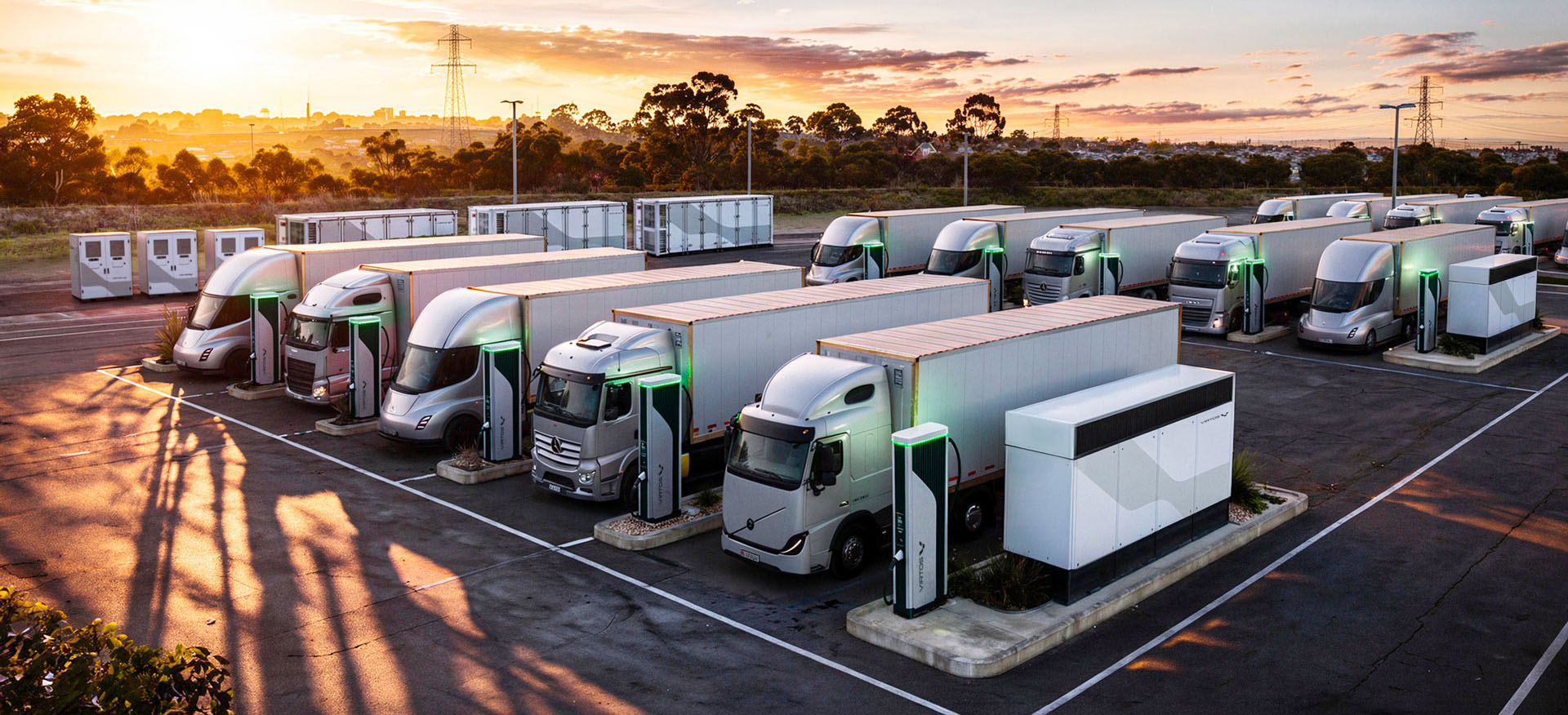
By integrating battery storage between the grid and the vehicle, Virtos can take energy at the rate the available grid connection allows and deliver it at the much higher power the vehicle needs.
It changes the question from:
"When can the grid give us the power we need?"
to:
"How much charging capacity can we unlock from the grid connection we already have?"
For us, that was the most important outcome from icnc26. Berlin reinforced our strategy, confirmed the relevance of the Virtos solution in Europe and gave us even greater confidence in the opportunity ahead.
We are now actively looking to work with organisations across Europe that need to deploy high-powered charging but are being constrained by the grid, supported through our planned European facility in Arnhem, Netherlands. Start with the connection you have, and expand as the fleet and the network catch up.
Virtos enables high-powered EV charging where the available grid cannot.